Delivery still limits VEGF therapy
First published September 12, 2025 • Last modified on July 26, 2026 • 2 min read • 424 words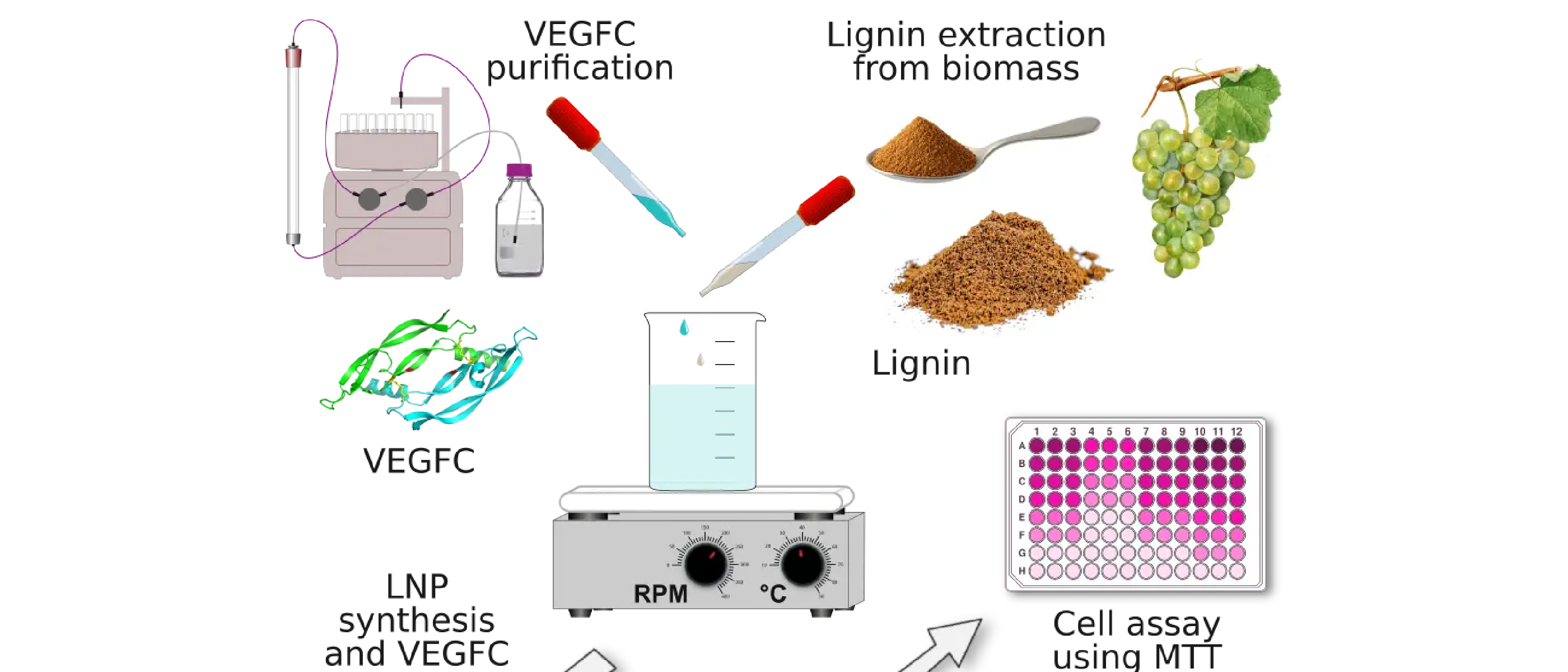
Simply injecting a lab-made growth factor into the body isn’t enough to copy what the body does naturally. That’s because our own growth factors are released in the right place, at the right time, and in the right amount, and their levels are constantly adjusted using feedback loops.
Take Vascular Endothelial Growth Factor (VEGF)-A, for example: The body produces it in tissues that don’t get enough oxygen. There, it forms a gradient: much VEGF-A in areas without oxygen, less in oxygenated areas. This way blood vessel cells know where and how to grow new, well-organized blood vessels to bring in oxygen. VEGF-C is thought to work in a similar way for the lymphatic system (the network of vessels that drains surplus tissue fluid). However, VEGF-C responds rather to tissue pressure and inflammation, not to a lack of oxygen (“hypoxia”).
Right now, nobody knows how to give VEGF-A or VEGF-C in a way that reliably grows new blood or lymphatic vessels. If we did, many heart surgeons would go out of business because we could treat a sclerotic heart artery by stimulating the body to grow a “natural bypass” instead of doing bypass surgery. One research team, led by Seppo Ylä-Herttuala, is perhaps closer than anybody else to making this a reality: they tested VEGF-D, which can trigger growth of both blood and lymphatic vessels, to help the heart recover after a heart attack.
A VEGF-C treatment called Lymfactin, delivered using a virus, reached phase II clinical trials for lymphedema (chronic swelling due to insufficient lymphatic function). However, it didn’t get further, probably because the virus was cleared quickly by the immune system, so the effect did not last very long and was not strong enough. Researchers are therefore looking for alternative delivery methods.
In our recent study, we used lignin nanoparticles made from grapevine waste to carry VEGF-C. The idea was to release VEGF-C slowly so that it stays available to cells for longer. We found that lignin nanoparticles do make VEGF-C available for a longer period, but that this extension alone is likely insufficient to have a meaningful clinical impact. Additionally, VEGF-C appeared to be a fairly stable protein, as it was able to resist on its own many proteases as well as long exposure to higher temperatures. We conclude that the nanoparticles probably didn’t add much extra protection. Because of this, we think that using pro-VEGF-C (an inactive precursor of VEGF-C) might work better in the future. However, pro-VEGF-C is harder to produce. You can read the full research article here: https://doi.org/10.1016/j.ejpb.2025.114860