Angiogenic doping - doable and difficult to detect
First published May 21, 2026 • Last modified on July 26, 2026 • 2 min read • 361 words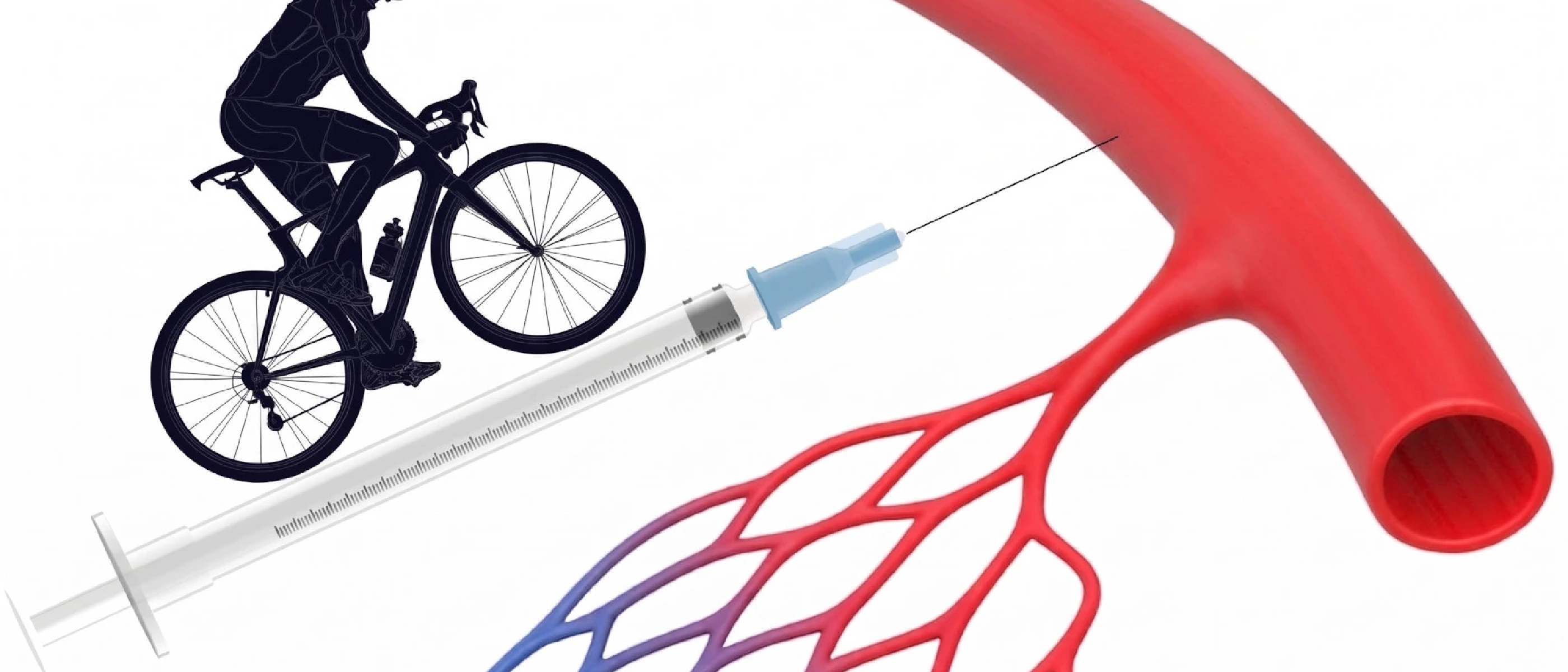
Less than 1% of athletes test positive for doping in typical world-class events (World Championships, Olympics). However, we know that at least 70% of the athletes are doping . How do we explain this discrepancy? My lab does angiogenesis research, i.e., we study the growth of blood and lymphatic vessels. Ever since the discovery of VEGF-B by Birgitta Olofsson and Ulf Eriksson in 1996 , I suspected that VEGFs could make for good doping agents, sooner or later. Anti-doping research in endurance sports has focused on blood and red blood cells (RBCs). Erythropoietin (EPO) doping shows how important the RBCs are. But considering the basic mathematical equation “concentration = mass divided by volume” tells us immediately that you can increase the RBC mass without increasing the RBC concentration by increasing the blood volume. Unsurprisingly, blood volume is very important for endurance performance, perhaps even more so than RBC concentration. This can be seen in “sports (pseudo)anemia”, where some athletes have a relatively low hemoglobin concentration despite unimpaired performance. What is the upper limit of the blood volume? And would it be possible to increase the upper limit by growing more blood vessels? We discuss Angiogenic Doping in our latest publication in Sports Medicine . Our hypothesis is that angiogenic doping might already be in use without any good possibility for WADA to detect it. VEGF growth factors are likely not yet used because their application requires advanced medical technologies that only a few laboratories can provide. However, there are quite a few small molecules that can be slowly up- and microdosed to stimulate both angiogenesis and RBC production in sync, thus avoiding major impacts on the athlete’s biological passport. Thanks go to Sofie Lehto, who laid the groundwork for this study, and to doping researcher and sports physician Sergei Iljukov for continuing to work on this side project with me over the last two years.
Available Downloads
Download publication in PDF formatThis is the first poster I had AI make for me. It's by no means perfect, but considering that I did not have to spend more than 15 minutes on it, it is acceptable:
Download poster in PDF format