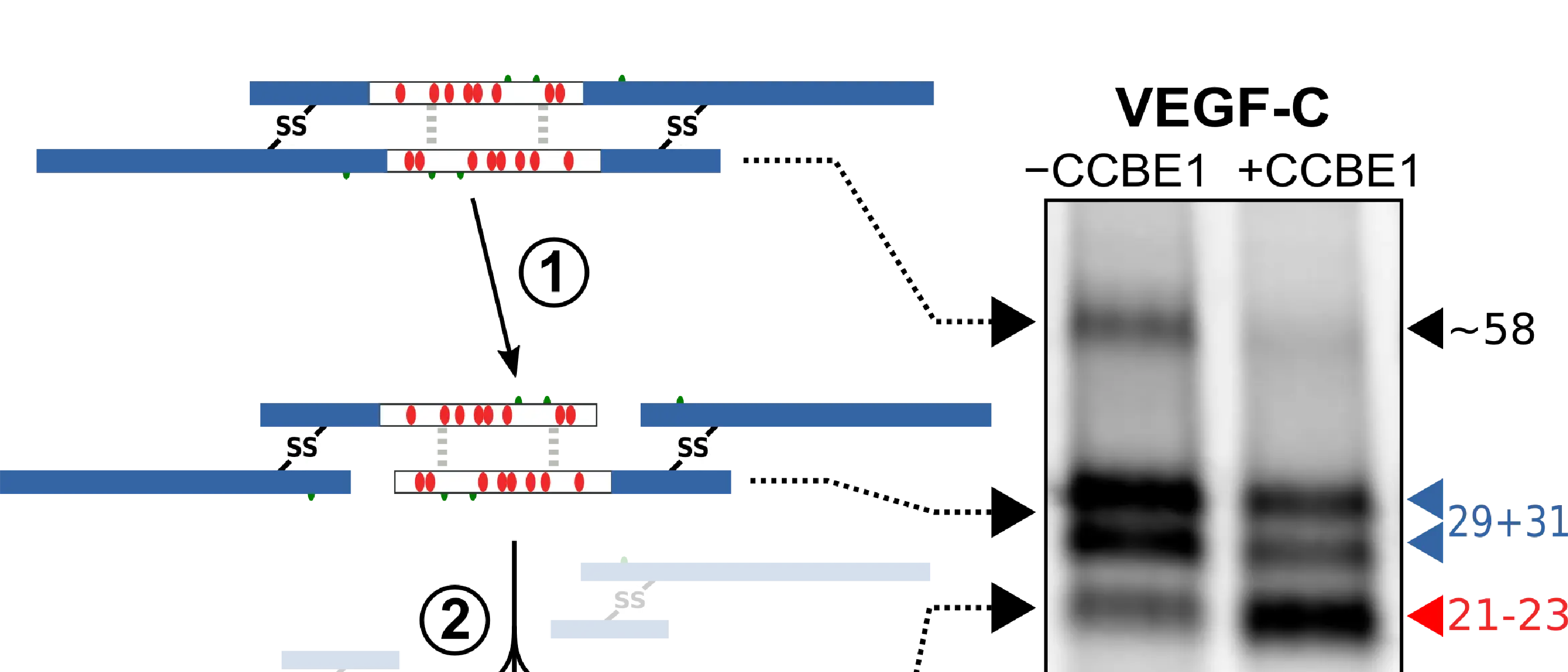
Yesterday, I talked about VEGF-C in the Zoom Lymphatic Seminar series, which is organized by Young Kwon Hong.
Image by Michael JeltschYesterday, I talked about VEGF-C in the Zoom Lymphatic Seminar series, which is organized by
Young Kwon Hong
. Since there was not much time to ask questions, I am happy to answer them via email. If you have missed the link to the presentation slides, here it is:
https://mjlab.fi/c
. The take-home message: Many different mature forms of VEGF-C can be generated from pro-VEGF-C by proteolytic processing (and the same is true for VEGF-D). These forms behave VERY differently from each other. The extreme case is activation by Cathepsin D (CTSD): When activated by CTSD, VEGF-C becomes almost exclusively lymphangiogenic, while after activation by the same protease, VEGF-D becomes exclusively angiogenic. The detection of CTSD-activated VEGF-C is difficult because all well-functioning antibodies recognize epitopes N-terminal to the cleavage site (or they straddle the cleavage site). The second talk was by
Barbara Garmy-Susini
, and her topic was a nice fit since she talked about using VEGF-C in the therapy of lymphedema. But as we know already from VEGF-A, vascular growth factors alone might be not sufficient to generate a functional vasculature…