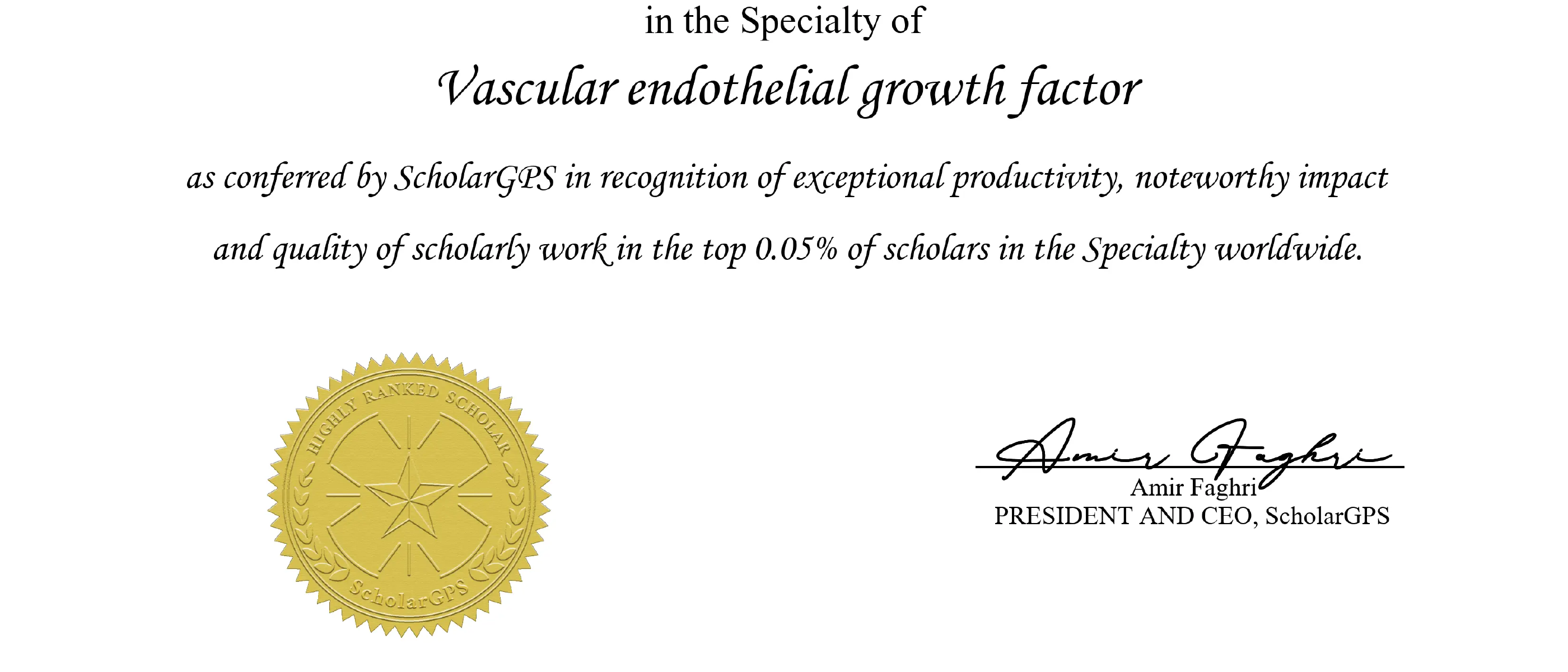
This morning, an email from ScholarGPS dropped into my inbox informing me that my prolific publication record, the high impact of your work, and the outstanding quality of my scholarly contributions have placed me in the top 0.05% of all scholars worldwide according to the most recent 2024 ScholarGPS rankings.
Image by Michael JeltschThis morning, an email from
ScholarGPS
dropped into my inbox informing me that Your prolific publication record, the high impact of your work, and the outstanding quality of your scholarly contributions have placed you in the top 0.05% of all scholars worldwide according to the most recent 2024 ScholarGPS rankings. Is this some scam to inflate my ego first and then make me buy into some subscription service? I was Googling around, but it seems to be a legitimate endeavor. I am not clear why somebody thinks that there should be still another company collecting this kind of research metrics, and why universities would be buying their ScholarGPS Pro subscription, which is aimed at academic institutions and apparently the way they monetize their service. ScholarGPS was founded in 2022 and evaluates individual scholars, institutions and publications. I briefly checked their rankings, and the institutional rankings are - with a few exceptions - pretty in line with other well-known ranking systems. E.g., the University of Helsinki
ranks 82nd
, behind the Karolinska Institute (67), ETH Zürich (56) and the University of Copenhagen (54). The
three highest ranked publications
are all about technical advances in protein analysis (Lowry, Bradford and Laemmli). Their numbers for these three (235778, 208682 and 195947 as of April 7th, 2025) do not match with Scopus (273686, 233419, 220553), Web of Science (356029, 242982, 259225), or Google Scholar numbers (234173, 261986, 307492). Do they really do their own counting? They claim to use AI. I don’t think counting counts as AI, and for all that counts, AI is really bad at counting and other simple math (
https://x.com/yuntiandeng/status/1836114401213989366
). What does this “top 0.05% of all scholars” actually mean? Not much if you do not know how big the pond is from where you are fishing. There is no precise definition of what a “scholar” is. Scopus and Web Science contain profiles for about 10 million unique authors. And 0.05% of these is 5000, which is still a large number. ScholarPro claims it has data about 30 million scholars and 15000 academic institutions. For all that it’s worth, I checked the other experts on the
VEGF list
, and the vast majority checks out as legitimate (#1 Napoleone Ferrara, #2 Kari Alitalo). They have broken up science into many subspecialties, and you can look at the ranked experts in each of these (e.g.
angiogenesis
or
TGF
. Although the categories sometimes appear random. Why are there VEGFs and TGFs, but not Angiopoietins?